Field notes · yarn craft
Reading the Loire in Touraine: Water Layers and Fish
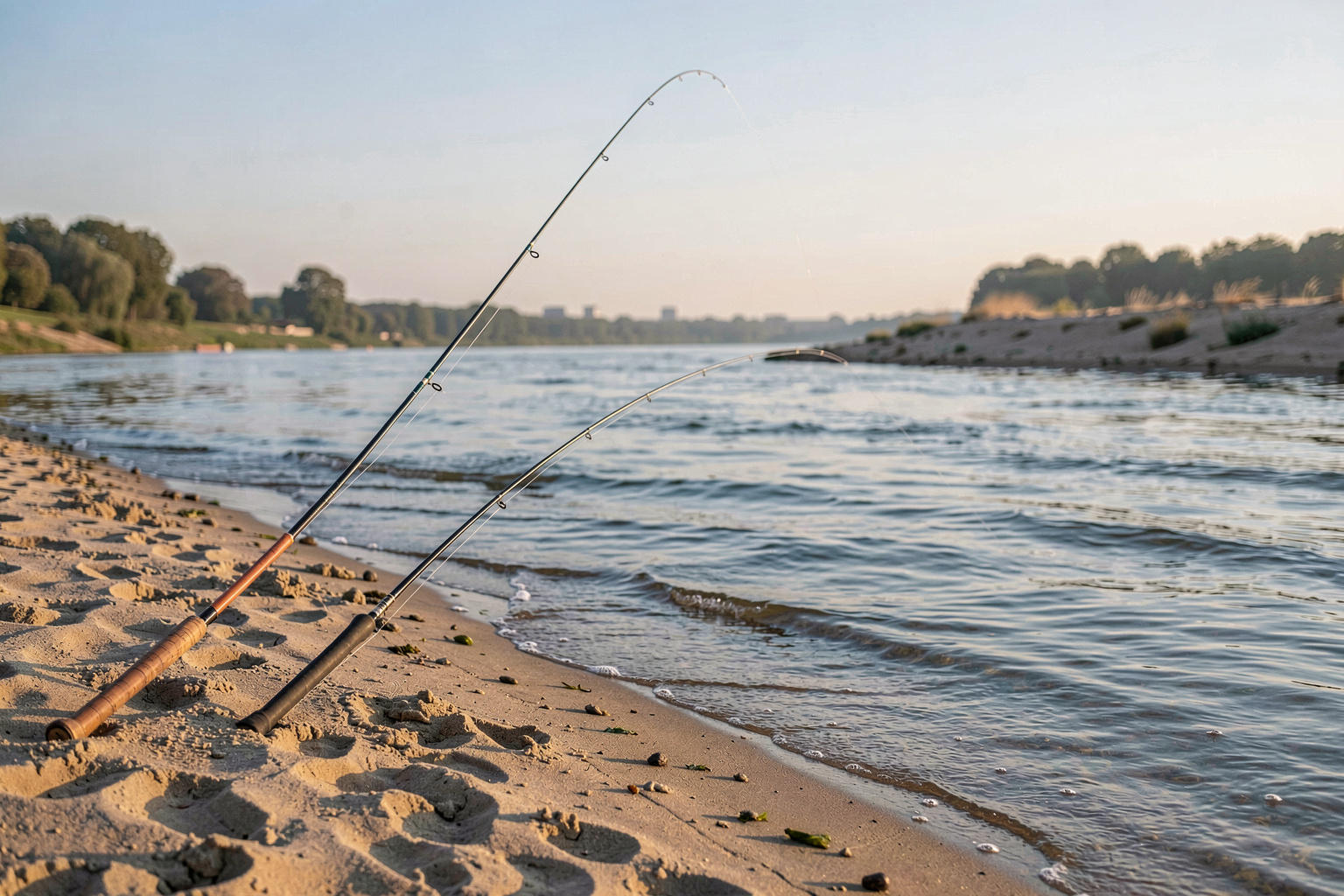
The Loire in Touraine is not one piece of water but several stacked on top of each other. An angler who reads the depth first, then picks a lure or a bait to match, finds fish faster than one who casts at random. A local leisure fishing magazine for Indre-et-Loire, Banc de Loire, treats the river as a set of distinct layers, each with its own species and its own approach.
Why the depth decides the lure, not the other way round
A lure is a tool for reaching a layer. It does not create the layer. On the Loire, the height of the water and the shape of the bed set where a fish will hold, and the angler's job is to put something in front of it at the right speed and the right depth. A shallow-running plug dragged through a deep pool wastes the cast. A heavy jig fished over a sand flat digs into the bottom and spooks everything.
The rule is simple: choose the layer, then choose the lure. A soft plastic on a light head works the margins. A sinking minnow or a metal blade covers the mid-column. A heavy lead and a bottom bait sit in the channel. The same rod can do all three, but not at the same time.
What does the sand margin hold?
The sand margin is the shallowest layer, often less than a metre of water. It warms first in the morning sun, and small prey move in to feed. This is where a beginning angler learns to feel a take, because the line, the float and the rod tip all show what is happening. It is also where black bass hold their positions, close to weed edges and the first drop into deeper water.
Fishing the margin is a quiet game. Long casts are not needed. A short, accurate cast along the edge of a weed bed beats a long one into open water. Light line and a small hook matter more than distance. The margin rewards patience and observation, and it is the layer where a young angler can see the result of a decision within minutes.
How does a take show at the surface?
A take at the surface is a conversation. The float dips, the line twitches, a small boil appears behind the bait. Each of these tells the angler something about what the fish is doing before the rod bends. A sharp, fast dip usually means a small fish taking on the move. A slow, deliberate pull means a bigger fish that has taken the bait properly and is moving off.
Reading the surface is a skill built on repetition. The angler watches the float, the line where it enters the water, and the water around the bait. A swirl with no pull often means a missed take. A pull with no swirl means the fish took below the surface. Adjusting the depth of the bait by a few centimetres often turns a run of missed takes into hooked fish.
What holds in the current vein?
The current vein is the mid-river layer, where the flow is steady and the bottom is often gravel or stone. This is the working water of the Loire. Baitfish hold in the slack behind stones, and predators patrol the seam between fast and slow water. Two rods on the same spot are common here: one for bottom-feeding carp, one for the catfish that sits in the deeper part of the vein.
Fishing the vein means managing lead and line angle. Too much lead and the bait anchors; too little and it swings through the zone too fast. The angler reads the surface to judge the speed of the flow, then sets the weight to match. A bait that moves at the speed of the current looks natural. One that drags or stalls does not.
How does an island or a channel change the plan?
An island splits the river into arms, and each arm becomes its own set of layers. A narrow channel beside an island may be shallow and fast, while the far side is deep and slow. The height of the water decides which species will use each arm. In low water, fish concentrate in the deeper channel. In higher water, they spread into the margins and the flooded edges.
The angler who reads the width of the river, not just the depth under the rod tip, finds more options. A short walk to the next arm can change the whole day. The same bait, fished in a different layer, can produce a different species.
What lives in the deep channel?
The deep channel, or fosse, is the lowest layer and the one that holds the largest fish. Carp feed on the bottom, and catfish hold in the deepest part of the flow. This is heavy tackle water: strong line, a lead that stays put, and a bait that can sit for hours. The angler sets the rod, watches the tip, and waits.
No-kill is the default practice on these big predators of the river. A fish that is landed quickly, handled with wet hands, and released without being laid on dry ground has a good chance of swimming away strong. The deep channel is not a place for a light setup or a hurried landing.
Why fish the early morning on a current mark?
A current mark fished at first light is the classic Loire scene: the rod bent downstream, a sandbank showing to the right, the water still cool from the night. Fish feed more confidently in low light, and the angler has the bank to themselves. The layers are the same, but the fish move between them more freely.
Morning also brings a practical advantage. The angler can see the surface, read the flow, and adjust before the sun is high. By mid-morning, the margins warm and the fish may move shallow. By afternoon, the deep channel is often the only comfortable place to be.
Putting the layers together
A day on the Loire in Touraine is a series of choices about depth. The margin teaches touch. The mid-column teaches reading a take. The vein teaches lead and line control. The channel teaches patience and heavy tackle. None of these layers is better than another; they simply suit different fish at different times.
The angler who understands the stack, from the sand at the edge to the stone in the fosse, can move through the day with a plan instead of a hope. That is the real skill of river fishing in this region, and it is learned one layer at a time.