Buyer's guide
Paracord supplies: the honest buyer's guide
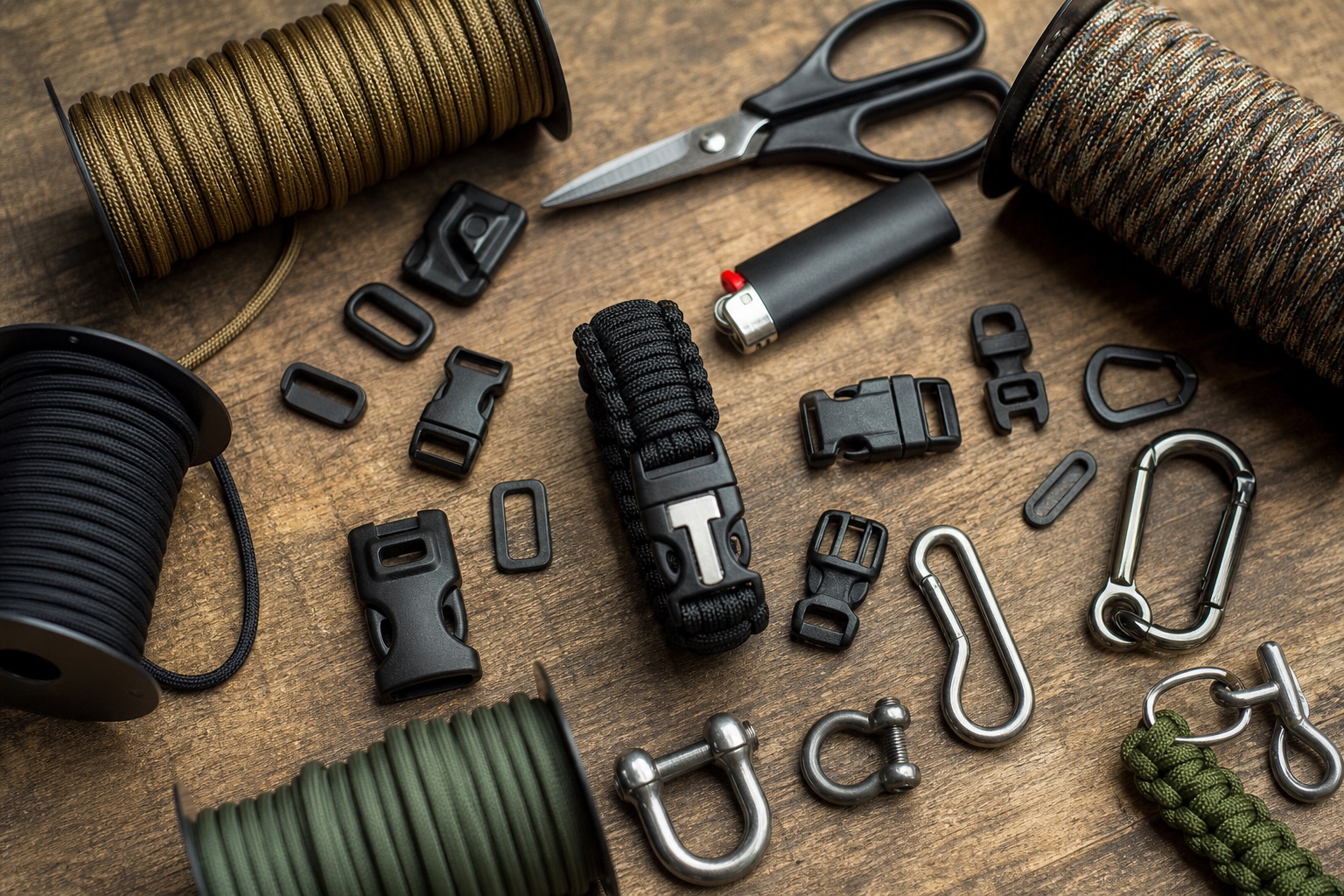
Paracord is cheap, which is exactly why the market is full of cord that is cheaper than it should be. This guide separates the purchases that matter from the ones that merely fill a basket. We link no sellers and take no affiliate money, the criteria are the product.
The cord itself
Buy one 100-foot (30 m) spool of honest Type III 550 in a colour you will actually use: olive drab, black or tan for field gear; something brighter for craft pieces that should be findable. Check three things before the rest: strand count (seven two-ply core strands, stated on the listing), fibre (100 percent nylon, not "nylon blend"), and sheath density (pick count in the description or a sample photo where the weave looks tight, not loose and shiny).
Add a 50-foot spool of micro cord (1.2–1.5 mm) for zipper pulls, lacing and decorative contrast, and, only if you rig tarps or make heavy straps, a spool of Type IV. Full type-by-type guidance is in the sizes reference; the buying version is simple: unbranded 550 sold well below the going rate of reputable nylon is where the disappointment lives.
Tools: four earn their place
- Sharp scissors or a hobby knife: paracord laughs at blunt blades and frays in protest. Sharp cuts melt cleaner (see joining).
- A lighter: the cord's own fastener. A soft flame beats a torch for controlled melts.
- Hemostats or needle-nose pliers, for pulling tight weaves (cobra rows, monkey fist final tightening) and threading cord through buckles.
- A cutting + melting combo tool: a hot-knife or electric rope cutter is the one luxury worth considering once you weave weekly; it fuses as it cuts.
Measuring tape, a permanent marker for cut marks, and a ruler complete the bench. Everything else is decoration.
Hardware: buckles, clips, rings
Bracelets live or die on closures. Our dedicated buckle guide compares single-bar, two-hole and shackle styles; the buying summary: curved side-release buckles in 3/4" or 1" for comfort, steel shackles when the bracelet doubles as cordage you might actually deploy, and screw-tight gates for the multi-tool-and-clip crowd.
For lanyards and key fobs, stock steel gate clips and split rings in two sizes; visible in our lanyard project. Beads are the other small part worth sizing before you order, because hole diameters vary from maker to maker: a bead size chart by brand spares you the pack that turns out to be a millimetre too tight for 550 cord. For dog collars, buy metal side-release or martingale hardware rated for webbing, never plastic craft buckles; the collar guide explains the welding trick that keeps cord from slipping through hardware.
Spotting fake "mil-spec" in thirty seconds
The three-question test. One, does the listing state core strands and fibre? Two; does a cut-end photo show a dense sheath you cannot push a nail into? Three, is the price plausible for real nylon? If any answer is no, treat it as craft cord and price it accordingly. Mil-spec is a documented standard, not a word: see the comparison.
The starter kit, totalled
| Item | Quantity | Rough budget share |
|---|---|---|
| Type III 550 cord, nylon, 7-strand | 100 ft spool | 40% |
| Micro cord | 50 ft spool | 10% |
| Curved side-release buckles 3/4" | 5-pack | 15% |
| Steel gate clips + split rings | assorted | 15% |
| Hemostats | 1 | 15% |
| Scissors, lighter, marker, tape | already owned | 5% |
That kit finishes your first cobra bracelet, a box knot keychain, a fishtail band and a lanyard, with cord left for repairs. Upgrade only what your projects demand, the cord is the one line item where quality is non-negotiable.
One last shopping habit: buy your first spools in colours you will actually wear. The drawer of every lapsed paracord maker holds the same evidence, neon hanks bought for enthusiasm rather than use. Olive drab, black, tan and one accent colour cover 95 percent of projects and all of the field ones; the exotic palette can wait until the braiding habit has taken hold.
The buyer's guide closes with a note on where the same logic applies outside cord: golf kit is sold the same way, with cheap shoes, bags and clothing that undercut on materials rather than price. A player comparing a $40 bag against a $120 one is doing the same arithmetic as a buyer weighing 550 cord against a bargain spool, checking shell fabric, stitching and hardware instead of the label. For a breakdown by category and material, the page on reading kit specs sorts shoes, bags and clothing the way this guide sorts cord, so the same habit carries over: name the material, then decide what the item has to survive.
Buying cord is only half the kit. The other half is knowing where you will use it, and for anyone who fishes the northern California rivers, that means reading water before reading a spool. A short companion piece, pocket water reading, covers hatches, flows and the small seams on the McCloud and Upper Sacramento where a length of cord earns its place: a wading staff lash, a fly box tether, a quick repair on a net frame. Read it after you have settled the supply question, not before, so the cord you carry matches the water you actually fish.
Buying cord is only half of a kit that gets used. The other half is the habit of measuring before you commit: the same discipline that keeps a hank of paracord from becoming a drawer of odd lengths applies to a kitchen scale and a timer. If you already weigh cord by the foot, the grind and ratio tables on the same site extend that habit to coffee, where dose and water weight decide the cup long before technique does. Neither purchase needs a premium label. Both reward a repeatable number you can write down and check against the next batch.
Cord wears out for the same reasons clothing does: abrasion, sunlight, repeated washing, and storage in a damp place. A sheath that has gone fuzzy or stiff will fail earlier than its core suggests, and a faded cover tells you the fibres have already taken UV damage. The same habits that extend a jacket apply here, so the notes on care and repair for everyday clothes are worth reading alongside this guide. Inspect a hank before you buy more, retire anything that has gone brittle, and store the rest dry and out of direct sun.
Buying decisions for cord rarely happen in isolation. The same retail shifts that changed how people order everyday goods also changed how they order supplies: longer delivery windows, thinner stock at local shops, and listings that mix genuine mil-spec cord with decorative imitations. A page on buying cord online examines what changed in online retail after the pandemic, which helps explain why a 100-foot hank can arrive from three different suppliers with three different actual lengths. Read it alongside this guide when you compare prices, because the shipping and stock patterns it describes affect whether the cord you order is the cord you receive.