Field craft
Paracord uses that earn their pack weight
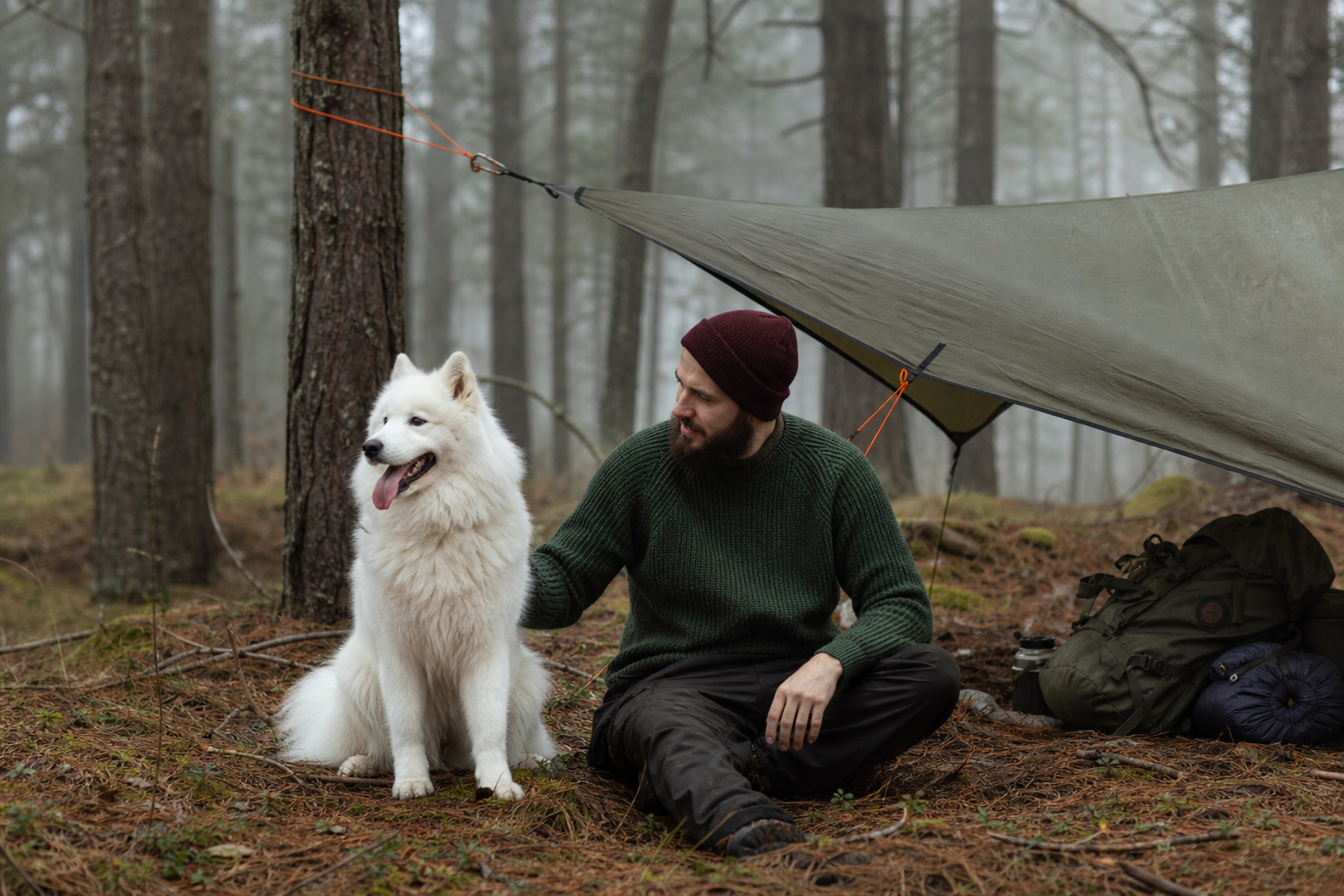
Few materials in a pack punch above their weight like a coil of 550 cord. It weighs grams per metre, holds hundreds of pounds, and its inner strands multiply its usefulness once you gut it. This is our working list of deployments, grouped the way a trip actually unfolds, not as a wall of thirty bullet points.
Shelter and sleeping
- Tarp ridgeline: the classic. Run cord between two trees, tension with a prusik loop or trucker's hitch, hang the tarp over it. One length, instant weatherproof volume.
- Guylines and tensioning: replace floppy stock guylines with paracord; the prusik lets you re-tension wet nylon without re-tying.
- Emergency lean-to; branch framework lashed at the joints; cord lashings hold where nails never could.
- Sleeping pad repair, a whipped wrap of cord around a cracking valve or split seam buys the trip.
- Boot and shoe repair, as lace, as a whip-stitched sole wrap, as a buckle replacement.
Camp kitchen and gear
- Bear hang; the counterbalance: cord over a branch, food bag at height. Use a joined length if your spool runs short.
- Gear hoist, backpacks lifted off wet ground and away from rodents, hung from the same ridgeline.
- Clothesline and drip line; over the tent vestibule; hang wet socks where airflow happens.
- Handle wraps; a cobra wrap over a knife or axe handle: grip, insulation, and spare cord riding where your hand already is.
- Zipper pulls, a box knot fob or short lanyard on every zipper you own, gloved-hand friendly.
- Pack strap repair; a sewn whipping plus cord loop replaces a broken ladder lock in minutes.
- Bundle and lashing, tent poles, firewood, sleeping roll: a lanyard knot loop makes every bundle a slip-free package.
First aid and emergencies
- Sling and swath, an arm sling cravated from cord over a shirt; rigid support without gear.
- Tourniquet strap: the cord is the strap; you still need a windlass and training. (See the honesty note below.)
- Splint lashing, sticks plus cord plus a sock: a field splint that holds real alignment.
- Gutted strands as suture thread, last-resort material, fine enough for closing a laceration when nothing else exists.
- Tooth and gear sewing; a core strand through a needle patches packs, jackets, tents.
- Fishing and snare line; core strands serve as leader material, snare loops, or trap triggers.
Honesty note: paracord is 3 mm nylon, not a trauma kit. A real tourniquet (wide band, windlass, training) outperforms any cord improvisation. Improvise when you must, but the best use of paracord in an emergency is the one you practised on a lazy afternoon, which is why our project guides double as deployment drills.
The maker's short list
- Survival bracelet, several metres of cord worn on the wrist; our survival bracelet guide covers deployment without wasting a centimetre.
- Dog collar and leash: washable, chew-resistant, colourfast: the collar tutorial.
- Keychains, fobs, lanyards: the entry projects of the craft, and genuinely useful ones.
- Hammock gear, water-bottle slings, axe masks, bike wraps: the shelf keeps growing.
Three habits that multiply usefulness
Carry it where your hands already go, a bracelet or belt means the cord is there when the pack is not. Pre-tie loops: an eye splice or lanyard knot at each end turns a raw length into a ready rig. Learn two friction hitches: the prusik and the trucker's hitch convert one fixed cord into an adjustable machine; the prusik guide is the place to start.
Lists kept by other enthusiasts
This page is a list, and lists are how a hobby hands its knowledge on. Three we keep bookmarked, built by people as stubborn about their subject as we are about cord.
- small label jazz catalogs, catalogue work on the independent labels: the kind of inventory nobody is paid to keep and everybody ends up using.
- calendrier anime, a French season-by-season schedule, and a reminder that a well-kept calendar beats any recommendation.
- quiz de culture générale en ligne, for the tent evening when the rain has set in and the cord is already stowed.
A coil of 550 cord earns its place in a golf bag the same way it does in a hiking pack: it solves small problems without adding noticeable weight. Two metres handle a loose bag strap, a split shoe lace, or a temporary fix to a push cart joint, and the inner strands work as whipping thread on a worn grip. For a fuller breakdown of what goes in the bag and what each item is made from, the reference on golf kit by material sorts shoes, bags and clothing by category, which helps when deciding what cord to carry and what to leave at home.
Cord work and open water share a habit: both reward calm repetition over gear. A bracelet tied in the dry months is a bracelet you can trust when your hands are cold, and the same holds for swimming, where technique matters more than equipment. Readers who want to build that base before a trip near rivers or coastlines can start with water confidence first, a Paracord Central page on learning to swim at any age in Fife. It sits alongside the cord and field craft material here, and it is a sensible companion to any kit list that assumes you might end up wet.
Cord earns its place in a pack by doing jobs that would otherwise need dedicated gear, and a short length of gutted 550 covers most of them: lashing a split rod tube, marking a wading line, replacing a bootlace, hanging a net to dry. The same logic applies to reading water. A note on the page points to a companion piece on hatches through the season, which treats the McCloud and Upper Sacramento as a case for matching cord and fly choices to flow and pocket water rather than to a fixed kit list.
Cord that holds a static load behaves differently from cord that takes a shock or a side pull, and kite buggy racing puts both on the same lines. Class 8 rules set minimum diameters and specify how bridles and strop attachments are inspected before a heat, which is a useful check on any cord you carry for load-bearing work. The setup notes and race day procedure on cord under load show where a single strand is expected to take the whole pull and where a doubled run is required, so the same reasoning applies to a ridge line, a tow loop or a repair lashing you tie in the field.
A cord list is only half of a loadout. The other half is knowing where you are allowed to be and what the ground will do when you get there. Hunters who carry 550 cord for hauling, shelter and gear repair still need to read water before they commit to a drainage, and to confirm season dates, tags and boundaries before the trip. A field kit that earns weight covers both sides: cord that solves problems on site, and planning that keeps the trip legal and dry. Pack the cord, then read the rules and the creek.