Field craft · gear
The survival bracelet, honestly
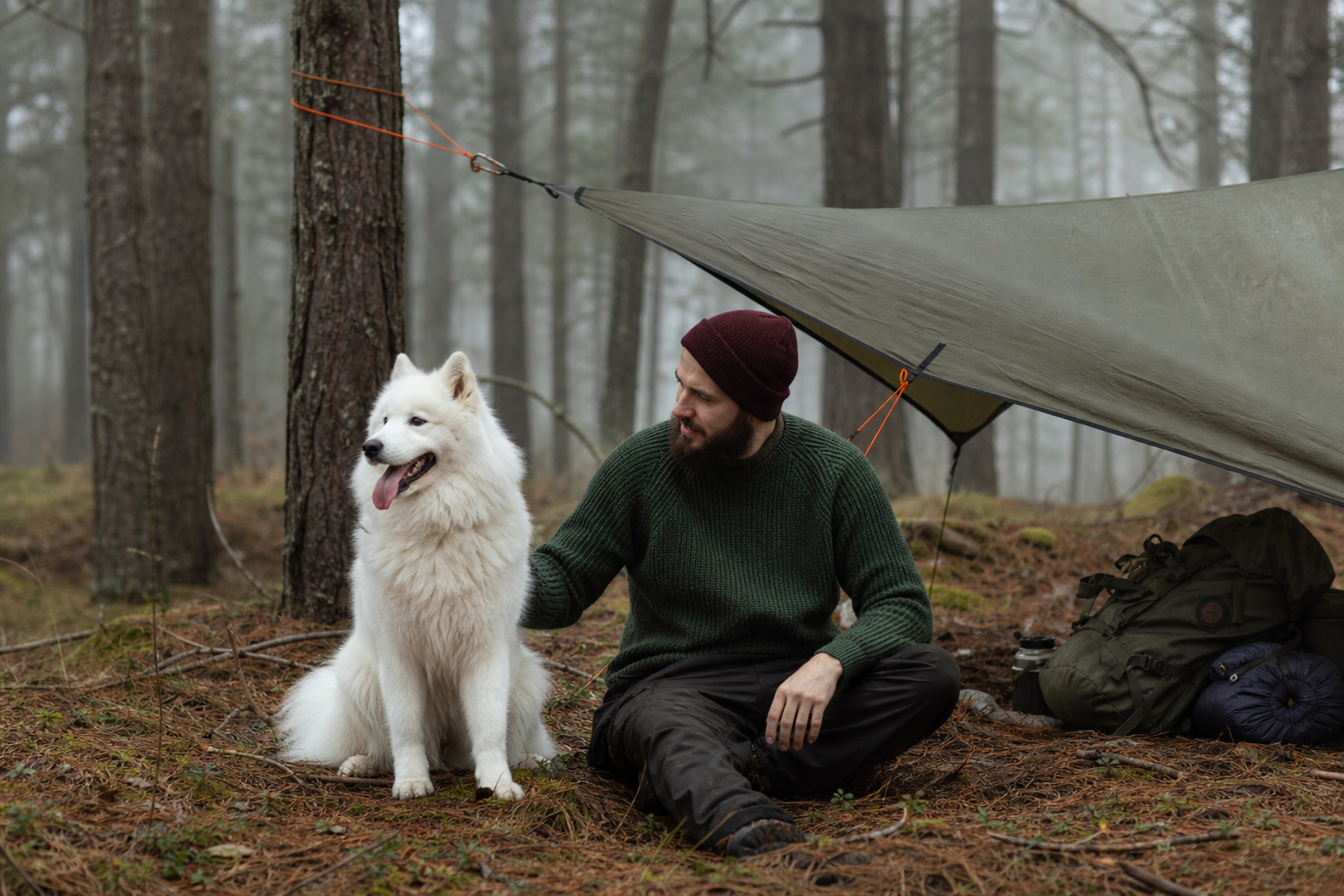
Few objects carry as much mythology per gram as the survival bracelet. Strip away the marketing and the case is simple and solid: a woven band of Type III 550 cord puts three to five metres of strong, versatile cordage on your body, wherever you are, whatever you forgot to pack. That is a genuinely useful thing. It is not a survival kit, and this page is about telling the difference.
The arithmetic
A standard cobra bracelet carries roughly 1.2 m of cord per 2.5 cm of woven length, so an 18 cm wrist wears about 3.5–4 m of cord. A fishtail carries about half that but deploys faster; a king cobra or a belt multiplies the figure. Gutted, that bracelet also yields 7 strands per metre of sewing thread, snare wire wrap, fishing line and lashing. For the full deployment list, see paracord uses in the field.
Deployments that actually work
- Tarp ridgeline and guy runs: the single best use. Four metres plus two prusik loops from your bootlaces is a shelter.
- Bootlace and strap repair: the boring, brilliant one. A broken lace miles from anywhere ends the trip; cord fixes it in two minutes.
- Bundle, hang, lash; splints, gear hoists, repairs to packs and tent poles.
- Gutted-strand improvisation, fishing line, sewing repairs, dental-floss-adjacent emergencies.
The mythology, audited
- "Break down the inner strands for fishing and snares." True, with a catch: unravelling, separating and re-plying seven strands by headlamp, with cold fingers, takes longer than the internet suggests. Practise once at home.
- "Tourniquet!" A 3 mm cord as a tourniquet strap is a last-ditch improvisation, not a plan; see the honesty note in our first-aid section. Carry a real one if you carry one at all.
- "550 lb rating." Lab number, new cord, no knots. Real-world planning uses a fraction of it; knots, age and UV take the rest. Details in the sizes guide.
- "The buckle with a hidden compass, flint and whistle." Each gimmick subtracts buckle strength. A plain strong closure and a lanyard-knotted whistle fob beats the Swiss-army buckle.
Choosing one well
Weave: deployment-first buyers should look at fishtail or a simple cobra; jewellery-first at king cobra. Closure: a shackle you can open with numb fingers, or a quality side-release; the comparison lives in our buckle guide. Cord: honest nylon 550 from the buyer's guide checklist, in a colour you can find in leaf litter. Fit: snug enough not to snag, loose enough to fit over a gloved hand or swollen wrist.
The one--minute test: before you trust a bracelet, time yourself unravelling it. Pick the final knot free, pull, and let the weave fall open. Under a minute: it is cordage. Over five: it is a bracelet that used to be cordage. Re-weave the tail with less melt, or switch to a fishtail.
Cordage is not the only field where condition decides value. A bracelet is judged by how it deploys; a watch is judged by what its paperwork proves. The vocabulary is the same: unworn, as new, full set, service history. Buyers who learn those terms stop overpaying for polish and start paying for provenance. The Unworn Ledger covers the pre-owned and unworn Swiss watch trade in plain English, from reference and serial matching to how box and papers move a price. Read it the way you read a knot guide: slowly, once, before money changes hands.
The honest verdict
A survival bracelet is not magic and not nonsense, it is worn redundancy: a few metres of excellent cord and a few metres of thread that happen to look good on a wrist. The people who get the most from one treat it as gear: they measure the cord, test the deployment, and re-weave the bracelet after each use. The people who get the least buy three at a truck stop. Our cobra tutorial and fishtail guide exist so you can be in the first group this weekend.
And if you already carry cord three other ways (in the pack, on the belt, in the lanyard) wear the bracelet you enjoy looking at. The best survival bracelet is, without embarrassment, the one you actually wear: the four metres of cord on the wrist you forgot to count will always beat the fifty metres in the drawer at home.
Naming the moves, elsewhere
Half of what this page does is put honest names on things: worn redundancy, deployment, mythology. Two references we like for the reason we like a good knot glossary, they name the moves so you can practise them.
- bop and swing step library, a step-by-step inventory of a partner dance, catalogued much as a knot book catalogues bends and hitches.
- vocabulaire de la danse, the French version of the same idea: learn the word first and the movement stops being a blur.
A note on the same site sits oddly beside cordage but fits the wider theme of skills that reward patience: a page on learning to swim at any age treats water competence the way this page treats cord, as something built from small, repeatable steps rather than bought in one go. The parallel is not decorative. Both a bracelet and a stroke are learned by tying and retying, or by swimming and swimming again, until the motion holds under stress. Readers who came here for the survival bracelet may find that page useful for the same reason: it states limits plainly and assumes the reader is starting from wherever they are.
Cordage solves problems in the field, but it does not decide where you may legally be. Readers who carry a bracelet into the backcountry often ask what comes next, and the answer is paperwork and water reading. A companion page covers planning a season inside the rules, with seasons by state and weapon, licences, tags and stamps, plus the field kit a season requires. The same page treats trout water: seams, riffles, pools and temperature. Read it before the cordage matters, because a legal season and a well-read river outlast any knot.