Field notes · yarn craft
River Sport Fishing: A Practical Starter Guide
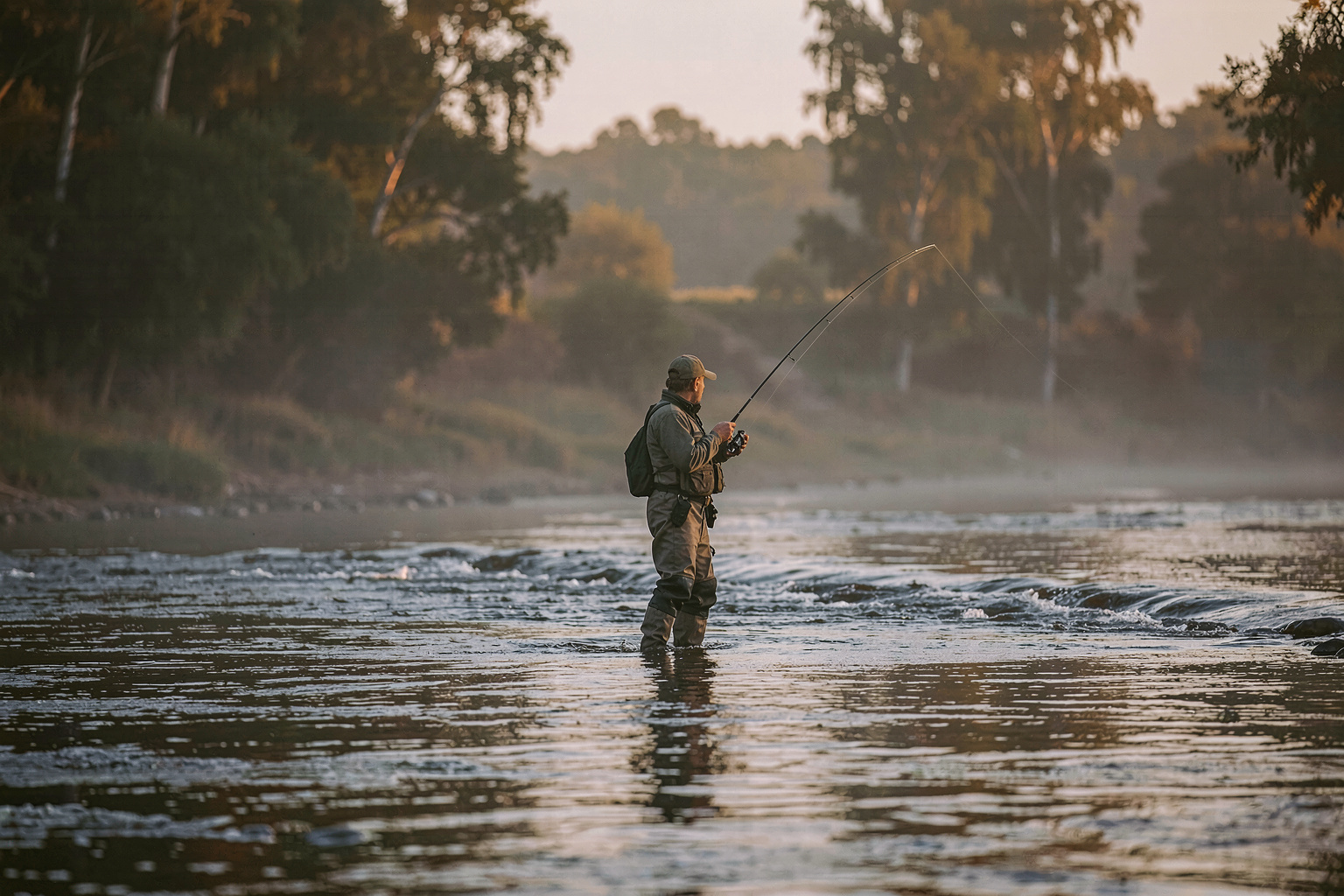
River sport fishing rewards observation more than equipment. An angler who reads the current, finds the seams where fast water meets slow, and presents a lure or fly at the right depth will catch fish on modest tackle. The river decides where fish hold, and the angler's job is to work with that structure rather than against it.
What makes a river different from still water
A river is a moving system. Water speed changes across the channel, and those changes create edges, pockets and foam lines where fish feed without spending much energy. Trout and salmon sit in the slower water beside a fast chute, while pike and perch often hold near cover in deeper, quieter bends.
Current also moves the angler's offering. A lure drifts downstream unless it is retrieved or swung, and a fly line drags unless it is mended. Learning to control that movement is the core skill of river fishing. Anglers who fish moving water seriously tend to keep notes on flow, weather and working tackle, and field notes of that kind are the backbone of sites such as mountainstateanglers.com, which covers salmon and trout water alongside broader river guidance.
Water level matters as much as speed. After rain, a river rises, colours and pushes fish toward the banks and into slack water. In low summer flows, fish become spooky and hold in the deepest riffles or under overhanging trees. A day that fishes well at one level can be dead at another.
How do you read a river for fishing?
Start at a high bank or a bridge and look at the surface before rigging up. Fast, broken water usually marks a shallow riffle over stone. Smooth, dark water often means depth. A line of bubbles or foam shows a current seam, and seams concentrate food.
Work upstream when fishing lures or flies, so fish are not spooked by an approach from behind. Cast slightly above the target and let the current carry the offering into the zone. Keep the rod tip low to reduce drag and stay in contact with the lure.
Look for these features:
- Riffles: shallow, oxygen-rich water where fish feed in low light.
- Pools: deeper water below a riffle, often holding the largest fish.
- Seams: the boundary between fast and slow water, a natural feeding lane.
- Undercuts: banks worn away below the surface, giving cover in daylight.
- Confluences: where a tributary enters, mixing food and often attracting fish.
A useful habit is to fish a stretch in sections. Cover the near water first, then step upstream and repeat. Rushing past a good seam is the most common mistake on a new river.
Which tackle suits moving water?
A medium spinning rod of around 2.1 to 2.4 metres handles most river work. A 2500-size reel loaded with 10 to 15 pound braid gives enough control for lures and enough sensitivity to feel a take in current. A fluorocarbon leader of 8 to 12 pounds reduces visibility in clear water.
For fly fishing, a 9-foot rod in a 5 or 6 weight covers trout and small salmon work. A weight-forward floating line handles most dry fly and nymph presentations, while a sink tip helps in deeper pools. Waders with rubber soles and studs grip better than felt on most modern riverbeds, and a wading staff adds a third contact point in fast water.
Lure choices stay simple. Spinners and small spoons work in riffles and runs. Soft plastics on a jig head fish deeper pools. Crankbaits that dive to a known depth let the angler probe a seam without guessing. Carry a small selection and change before moving far.
When should you fish, and when should you stay home?
Light drives feeding. Dawn and dusk are the strongest windows on most rivers, especially in summer when the sun is high and water is clear. Overcast days extend the bite through the middle of the day. Rain can improve fishing by raising water and lowering light, but heavy rain that muddies a river usually shuts it down.
Water temperature sets the season. Trout feed actively in cool water and slow down when it climbs. Salmon runs follow their own calendar, and local rules often close or restrict certain stretches at certain times. Check the regulations for the specific river before travelling, because seasons, permits and bag limits vary between catchments and can change year to year.
Wind is worth watching. A downstream wind helps a fly cast but makes lure control harder. An upstream wind does the opposite. On narrow rivers, trees matter more than wind, so plan the cast before stepping into position.
Wading safely on a river
Wading is where most river accidents happen. Move slowly, keep the feet apart, and shuffle rather than step. Cross at a wide, shallow riffle rather than a narrow deep chute. Unclip a wading belt only when necessary, and never wade above the waist in fast water.
A wading staff is not a luxury. It finds holes, ledges and soft gravel before a boot does. Studded soles hold on algae-covered rock, but they slide on smooth bedrock, so test each step. In cold water, a fall can lead to cold shock within seconds, which is why many anglers fish from the bank in winter.
Solo anglers should tell someone where they are going and when they expect to return. Mobile signal is unreliable in many river valleys, so a plan matters more than a phone.
Handling fish well
Good handling keeps fish alive and populations healthy. Wet the hands before touching a fish, support the belly, and avoid squeezing. Use a knotless rubber net rather than a knotted nylon one, which strips the protective slime layer.
Keep the fish in the water while unhooking it. Barbless hooks come out quickly and do less damage. If a photograph is wanted, lift the fish briefly, support it horizontally, and return it head-first into the current. Hold it upright until it kicks away on its own.
In warm water, fight fish quickly and release them without lifting them from the river. Prolonged play in low-oxygen conditions is the main cause of post-release mortality in summer.
A simple day on the water
Arrive early, walk the bank, and watch for rising fish or baitfish movement before rigging. Fish the nearest seam first, then work upstream in short sections. Change lure or fly depth before changing pattern. Keep a note of what worked, the water level and the weather, because patterns repeat on the same river.
River sport fishing is a skill built over seasons. The angler who reads water well will out-fish the one who simply owns more gear. Start with a short stretch, learn it properly, and the rest of the river becomes easier to understand.